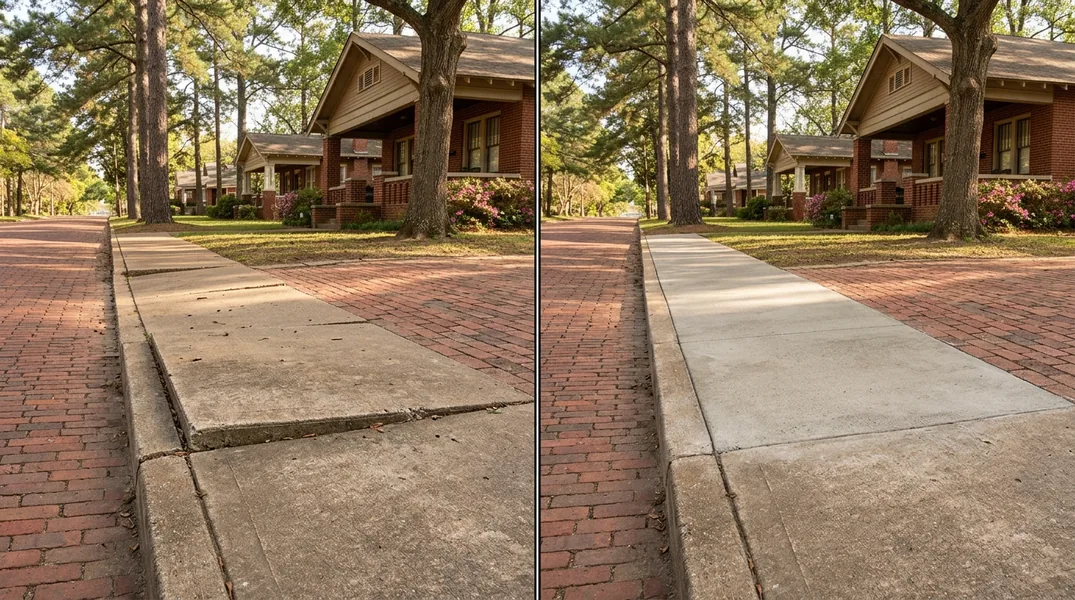
Understanding Tyler's Soil Composition and Its Impact on Concrete
If you own a home or business in Tyler, you live in one of East Texas's most geologically distinctive regions. The soil beneath your property is predominantly composed of red clay and sandy loam, a combination that has shaped the landscape for millennia. While this soil is excellent for agriculture and native vegetation, it presents specific challenges when it comes to concrete construction and longevity.
Red clay is highly expansive, meaning it absorbs moisture and swells significantly during wet seasons, then shrinks and hardens as it dries. Sandy loam, by contrast, tends to shift and settle unevenly over time, especially when subjected to heavy loads like vehicles or building foundations. When concrete is poured directly on these unstable soil types without proper preparation, the foundation beneath can move independently from the slab above, leading to cracking, settling, and premature failure. Understanding this relationship between Tyler soil and concrete is the first step toward protecting your investment.
Red Clay Slab Cracking: Why It Happens in East Texas
Red clay slab cracking is one of the most common concrete problems homeowners face in the Tyler area. The culprit is the clay's natural tendency to expand and contract with moisture changes. During spring and early summer, when East Texas receives heavy rainfall, red clay absorbs water and expands upward, exerting tremendous pressure on the concrete slab above. This pressure can cause the concrete to crack, sometimes in dramatic fashion with large sections heaving or buckling. Conversely, during dry periods, the clay shrinks away from the concrete, leaving voids and allowing the slab to settle unevenly.
The severity of red clay slab cracking depends on several factors, including the thickness of the concrete, the depth and quality of the base preparation, and the specific moisture patterns in your yard. Cracks can start small and hairline thin, but they tend to worsen over time as water seeps into the sub-base, accelerating the expansion and contraction cycle. If you notice cracks forming in your driveway or patio, addressing them early with Concrete Repair & Resurfacing can prevent more costly damage down the road. Ignoring these warning signs often leads to structural failure that requires complete replacement.
Sandy Loam Driveway Settling: The Hidden Problem
While red clay tends to heave and crack, sandy loam presents a different challenge: gradual, uneven settling. Sandy loam is naturally loose and compressible, especially in areas where it hasn't been disturbed or properly compacted. When a Concrete Driveways is installed over improperly prepared sandy loam, the soil beneath can compact further under the weight of vehicles and foot traffic, causing the concrete to sink at different rates in different areas. This settling creates a wavy, uneven surface that not only looks poor but also creates drainage problems and safety hazards.
The problem is often invisible at first. A driveway may look fine for the first year or two, but as traffic continues and the sandy loam compresses, you'll begin to notice low spots where water pools after rain, or subtle slopes that make walking or driving feel uneven. Over time, these settlement issues can cause the concrete to crack as different sections move at different speeds. Proper site preparation, including thorough compaction and the installation of a stable base layer, is essential to prevent sandy loam settling. This is why professional installation matters so much in the Tyler area.
Proper Concrete Preparation for East Texas Soil Conditions
The key to building long-lasting concrete in Tyler is understanding that preparation is everything. Before any concrete is poured, the soil must be properly evaluated and prepared to handle the unique challenges of red clay and sandy loam. This process begins with removing unstable topsoil and excavating to a stable layer. For red clay areas, contractors often install a moisture barrier to reduce the effects of expansion and contraction. For sandy loam, thorough compaction with heavy equipment is critical to ensure the base won't settle after the concrete is installed.
A quality base layer, typically consisting of compacted gravel or recycled asphalt, provides a stable foundation that allows for proper drainage and reduces direct contact between the concrete and problem soils. The thickness and composition of this base layer should be determined by a professional who understands East Texas soil conditions. Additionally, proper slope and drainage design help water move away from the concrete rather than pooling underneath, where it can accelerate soil movement. When these preparation steps are done correctly, concrete can last 25 to 30 years or more, even in challenging soil environments. Cutting corners on preparation to save money upfront almost always results in expensive repairs or replacement later.
Signs Your Concrete Needs Professional Attention Near Me
As a homeowner in Tyler, knowing when to call a professional is crucial. Early warning signs that your concrete is suffering from soil-related issues include hairline cracks that appear suddenly, sections of concrete that heave or buckle, uneven surfaces where water pools, or visible gaps between the concrete and adjoining structures like foundations or curbs. These signs indicate that the soil beneath is moving, and the problem will only worsen without intervention.
Don't wait until your driveway is severely damaged to seek help. Small cracks can be sealed to prevent water infiltration, and minor settling can sometimes be corrected with mudjacking or other stabilization techniques. However, if damage is extensive, you may need complete replacement. The sooner you have a professional assess the situation, the more options you'll have and the less expensive the solution is likely to be. Tyler Concrete has years of experience diagnosing and fixing soil-related concrete problems throughout the area. If you're noticing issues with your concrete, contact us at (903) 630-8670 to schedule a free estimate and learn about your repair options.
Protecting Your Concrete Investment Long Term
Beyond initial construction and repair, protecting your concrete from soil-related damage requires ongoing maintenance and care. Regular sealing helps prevent water from penetrating the surface and reaching the soil beneath, which reduces the expansion and contraction cycle. In areas prone to red clay movement, maintaining consistent moisture levels in the soil can help reduce dramatic seasonal swings. This might mean ensuring gutters and downspouts direct water away from your concrete, or in some cases, installing proper drainage systems around problem areas.
If you're planning new concrete construction, whether it's Concrete Driveways, Concrete Patios, or Stamped & Decorative Concrete, working with a contractor who understands East Texas soil is essential. Tyler Concrete brings local expertise to every project, ensuring your concrete is built to last despite the challenging soil conditions. We know how red clay and sandy loam behave throughout the seasons, and we design and construct accordingly. Whether you need new concrete or repairs to existing surfaces, we're here to help. Reach out today at (903) 630-8670 or visit our website to learn more about how we can protect your concrete investment.
Looking for a professional concrete contractor in Tyler? Tyler Concrete responds fast for all your concrete needs.
Get a Free QuoteOur services: Concrete Driveways · Concrete Patios · Stamped & Decorative Concrete